
Hancock County Probate Records
The Hancock County Probate Court is the local office for estate, will, guardianship, conservatorship, marriage, firearm-license, vital-record, traffic, and involuntary-commitment matters. The same county courthouse address is used by Probate Court, Superior Court, Magistrate Court, and other county offices, but the record custodian is not the same for every file. Estate and guardianship records route to Probate Court. Divorce records route to the Clerk of Superior Court. Jail and warrant questions route to the Sheriff or the issuing court.
For Hancock County probate records, the key point is that no official public online Probate Court case-search portal was located in the research sources. That makes the office channel important. A person looking for a will, estate filing, guardianship order, conservatorship document, or letters testamentary should start with the Probate Court staff and ask what can be inspected, copied, or certified. For marriage and some vital-record requests, state agencies may also have a role, but Probate Court remains the county office tied to local licenses and filings.
The Hancock County courts directory confirms that Probate Court handles a wide mix of record types. That mix makes the office different from Superior Court. A single Probate Court counter may handle a will filing in the morning, a marriage license request later, and a traffic or vital-record question the same day.
Hancock County publishes its Probate Court page as the local source for probate functions.
The Probate Court page is the office-specific starting point for local probate, license, and vital-record questions in Hancock County.
Hancock County Probate Terms
Probate filings use terms that are simple once the role is clear. A will case is not the same as an estate without a will. A guardian is not the same as a conservator. These terms matter when asking Probate Court staff for the right file, copy, form, or hearing date.
- Testator
- The person who made a will.
- Executor
- The person named in a will to carry out estate duties after court authority is granted.
- Intestate
- A death without a valid will, so estate authority follows Georgia probate rules.
- Guardianship
- Court-supervised authority over care or decisions for a minor or incapacitated adult.
- Conservatorship
- Court-supervised authority over another person's property or finances.
Search Hancock County Probate Records
Hancock County probate record access depends on the type of case. Estate files may include petitions, wills, letters, creditor notices, inventories, returns, accountings, bonds, and final orders. Guardianship and conservatorship cases may include personal, health, or financial details, so access can be narrower. Involuntary-commitment files are sensitive and should not be treated as open for routine public viewing.
The research did not locate a county-run online probate case search. Use a direct request process instead. When calling or visiting, give the decedent's name, ward's name if appropriate, approximate date range, case type, and the exact document needed. If the request is for a certified copy, say that up front because certified probate copies are used for banks, deeds, estate administration, and other legal steps.
- Identify the probate matter as an estate, will, guardianship, conservatorship, trust, vital record, license, traffic case, or commitment matter.
- Call Hancock Probate Court to confirm the record custodian, fee, payment method, and whether an appointment is needed.
- Use the Georgia Probate Court Standard Forms index when a filing is needed, then file with Hancock Probate Court.
- Ask whether the record can be inspected, copied, certified, or released only by party status or court order.
- For older or closed matters, ask whether the file is on site, archived, or requires staff retrieval.
Note: Probate Court can confirm local process, but staff cannot replace legal advice for estate or guardianship duties.
Hancock County Probate Court Contact
Probate Court is the only Hancock County probate office identified in the research. Staff contacts are published by Hancock County and should be used for case-specific questions about estates, wills, guardianships, conservatorships, licenses, vital records, traffic matters, and involuntary commitments. Call ahead before bringing forms, because local filing fees and payment methods were not published in the captured official sources.
Hancock County Probate Court
12630 Broad Street
Sparta, GA 31087
(706) 444-5343
Monday-Friday, 9:00 a.m.-5:00 p.m. except holidays
Judge: Sabrina Lamar, ext. 2017, probate_court@att.net
Clerk: Tameke' Ingram, ext. 2015, hcprobatecourt@att.net
Deputy Clerk: Jasmine Stokes, ext. 2016, hcprobatecourt@att.net
Hancock County Probate Forms
Georgia uses statewide probate forms for many filings. The Supreme Court of Georgia probate court standard forms page is the safer source than a generic form site. It includes many estate and guardianship categories, including administrator, conservator, executor, bond, custodial-account, doubtful-claim, and leave-to-encroach forms.
The standard form index does not decide whether a Hancock County filing is correct for a specific person. A filer should confirm the local filing process with Probate Court, especially when the case involves a missing person, minor, adult ward, bond, inventory, accounting, or request for letters. Local staff can identify filing location and fee requirements, while legal counsel can answer legal strategy questions.
Georgia's probate form index provides the statewide form library used for many probate filings.
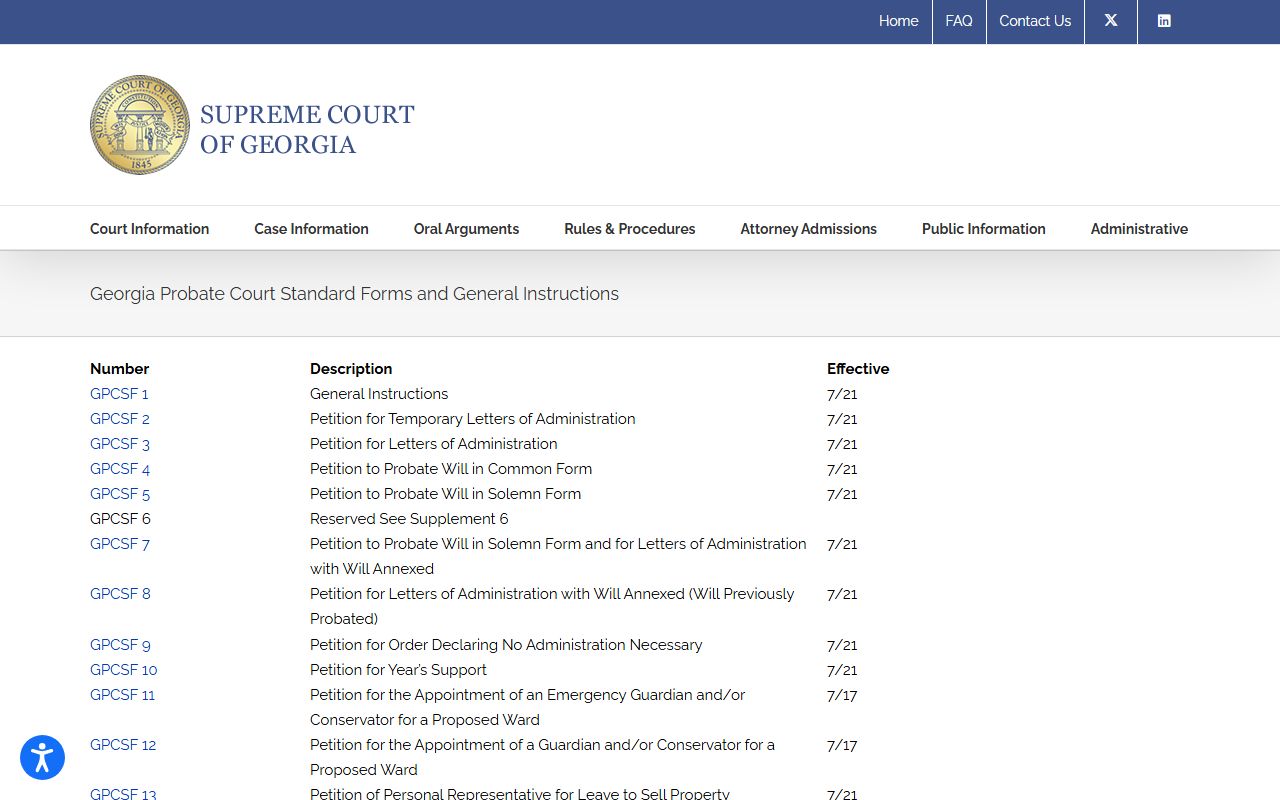
Using the statewide form source helps keep Hancock County probate filings tied to Georgia's current form set.
Hancock County Probate Fees
The official Hancock County sources reviewed did not publish a local probate filing-fee schedule for estates, guardianships, certified probate copies, or Probate Court license services. That gap should be handled by calling Probate Court before filing or ordering copies. The state vital-record and marriage-record sources do provide some fees for DPH marriage-record requests, but those are not the same as all Hancock Probate Court filing costs.
| Item | Amount | Source note |
|---|---|---|
| Hancock probate filing fees | Not located in official Hancock sources | Confirm with Probate Court before filing. |
| Certified probate copies | Not located in official Hancock sources | Ask Probate Court for current copy and certification costs. |
| DPH marriage search | $10.00 nonrefundable | State DPH marriage-record request process. |
| DPH additional copy at same time | $5.00 | Applies when ordered under DPH marriage-record rules. |
| Standard probate forms | Free to view or download | Local filing or copy fees may still apply. |
Hancock County Vital Records
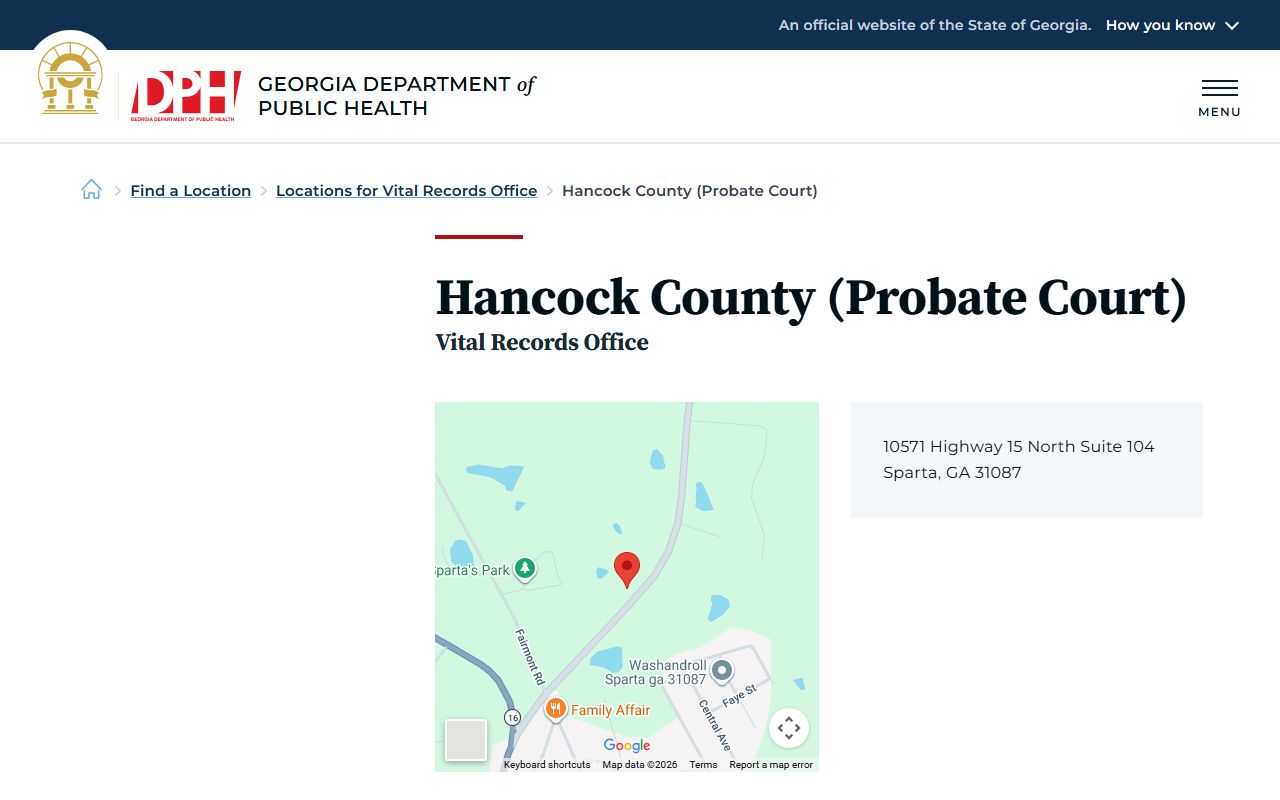
Probate Court also connects to marriage and vital-record work in Hancock County. The county page lists marriage licenses and birth and death certificates among Probate Court functions. The Georgia Department of Public Health location page identifies Hancock County Probate Court as a vital-record office location, while the Georgia DPH Vital Records program remains the state-level source.
Marriage records can have more than one route. The DPH marriage-record instructions state that DPH has marriage applications and certificates from June 1952 to August 1996, while records outside that range are available from the county probate office where the license was issued. Georgia's marriage guide also says marriage licenses are issued by county probate courts and must be returned after the ceremony.
Georgia DPH Vital Records is the statewide program for vital-record requests.

State DPH access is useful when a Hancock County marriage or vital-record request fits the state program's date and eligibility rules.
DPH marriage-record instructions explain state search fees and copy limits.
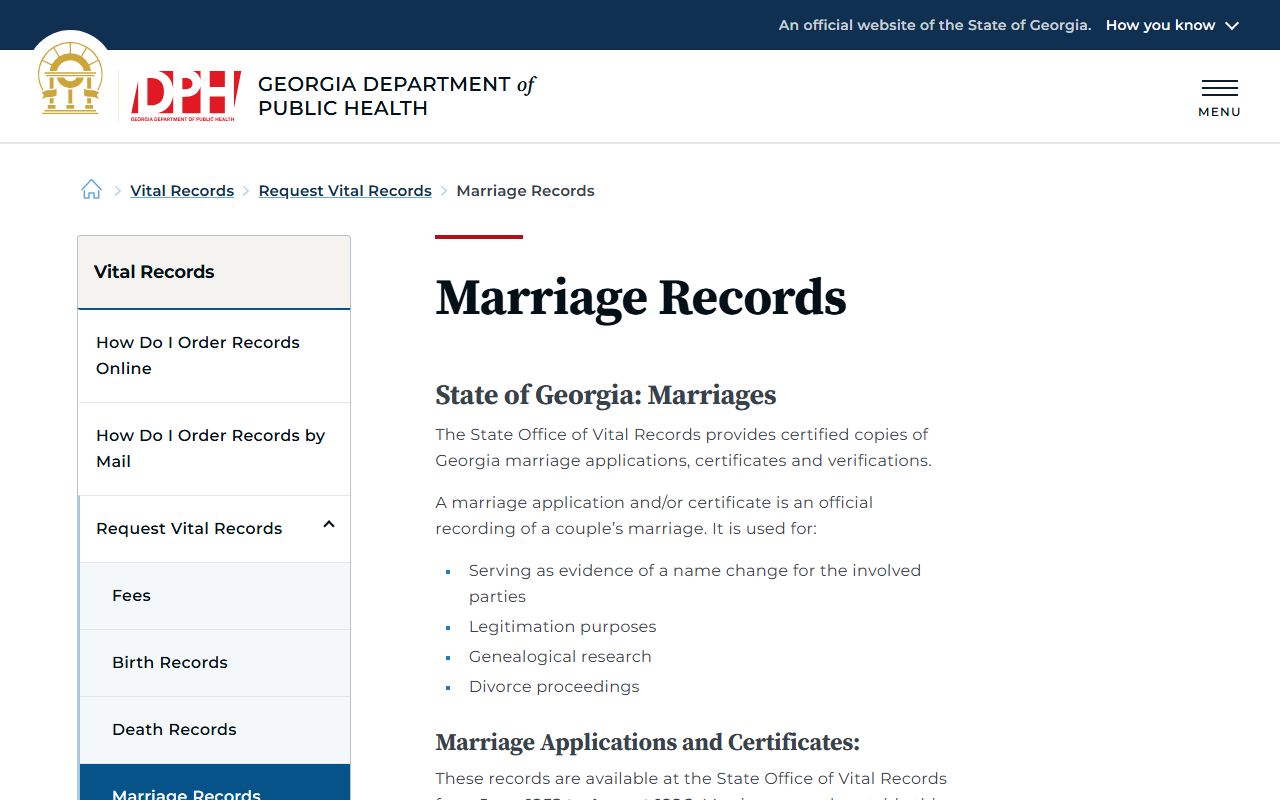
For local marriage-license questions, Hancock County Probate Court remains the county office to contact.
Georgia.gov's marriage license guide describes statewide license rules.
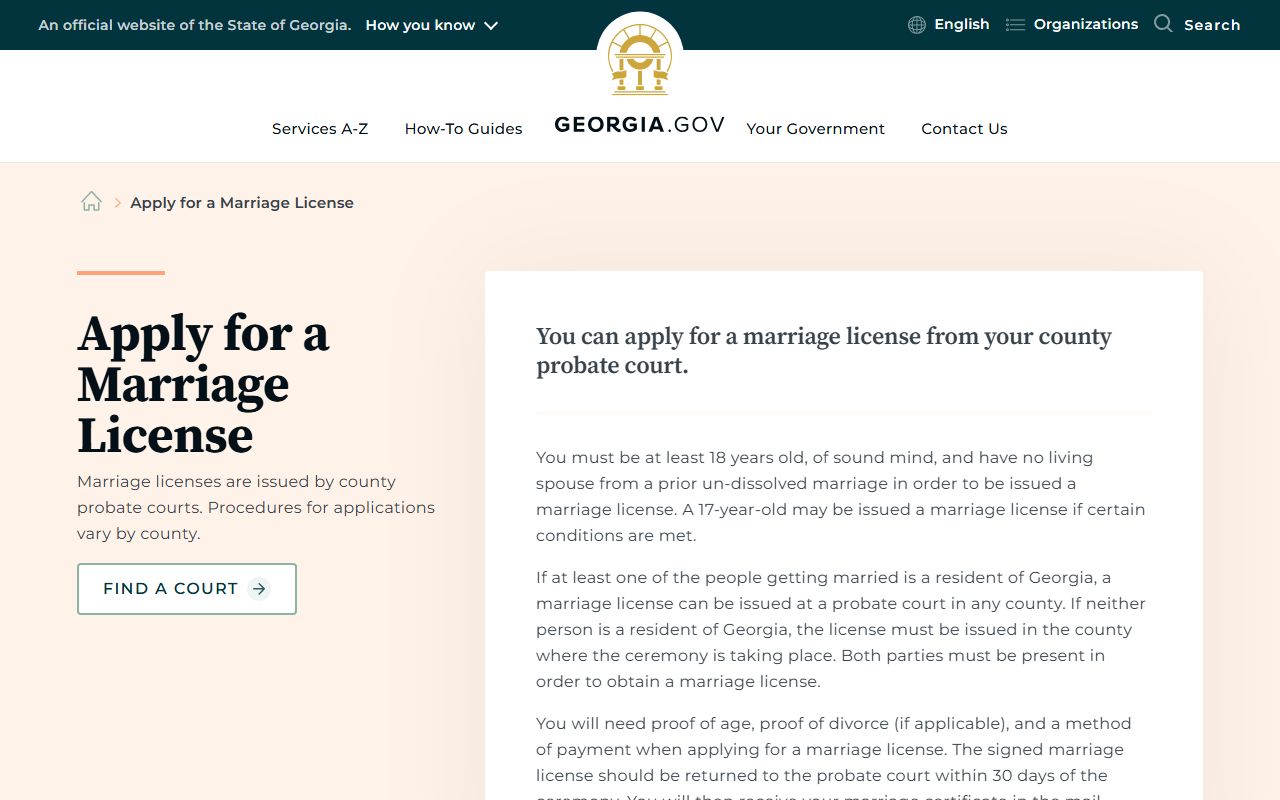
Those statewide license rules explain why both applicants, residency, prior divorce proof, and license return timing can matter.
Georgia.gov's vital-record request guide separates marriage, divorce confirmation, and county divorce-copy routes.
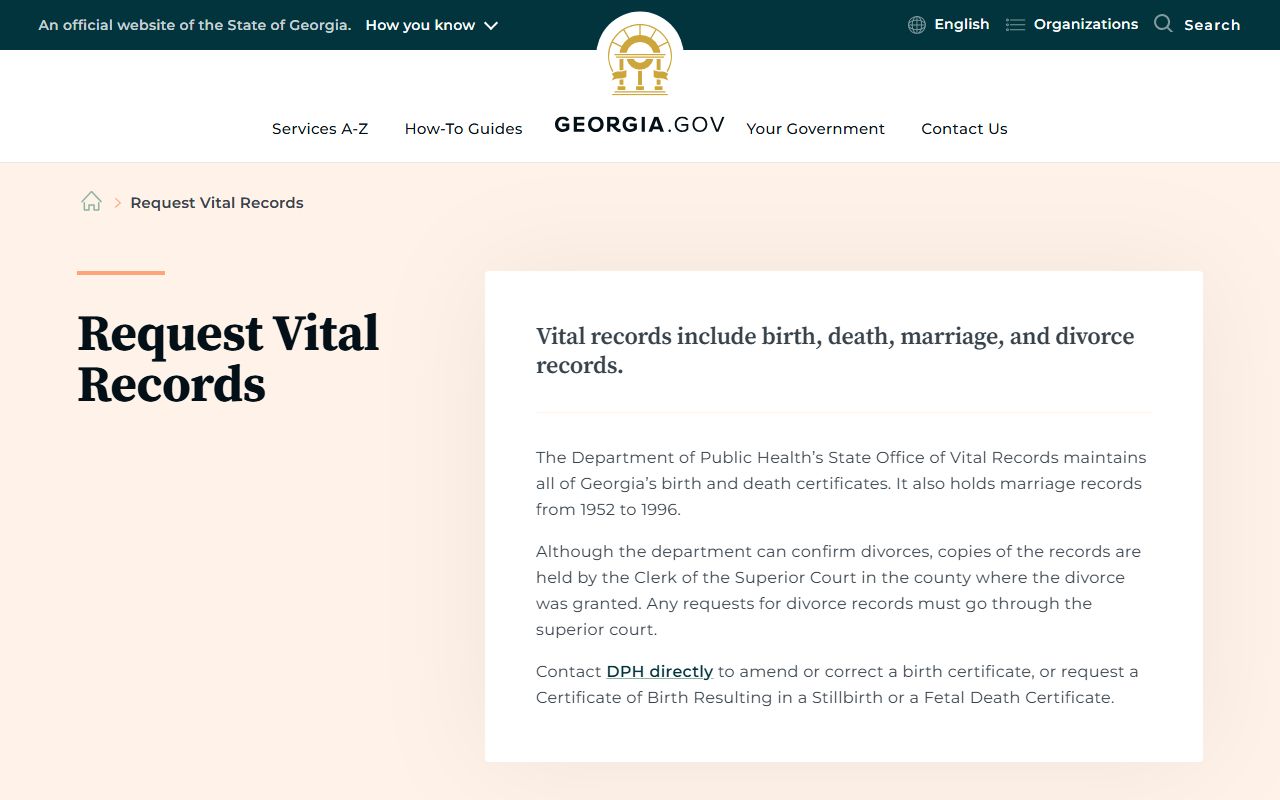
That distinction matters because Hancock County divorce copies are handled by the Clerk of Superior Court, not Probate Court.
Restricted Hancock County Probate Records
Not every Hancock County Probate Court record is open in the same way. Ordinary estate filings may be more accessible than files that include minors, incapacitated adults, medical facts, mental-health allegations, or involuntary-commitment proceedings. Guardianship and conservatorship records can include medical, functional, or financial details. Those details may be redacted, withheld, or released only to authorized persons.
Adoption records are separate and highly restricted under Georgia law. O.C.G.A. § 19-8-23 requires adoption-related court and department records to be sealed and locked. If a request involves adoption, commitment, juvenile information, or a protected person, ask Probate Court what proof of authority or court order is required before expecting access.